
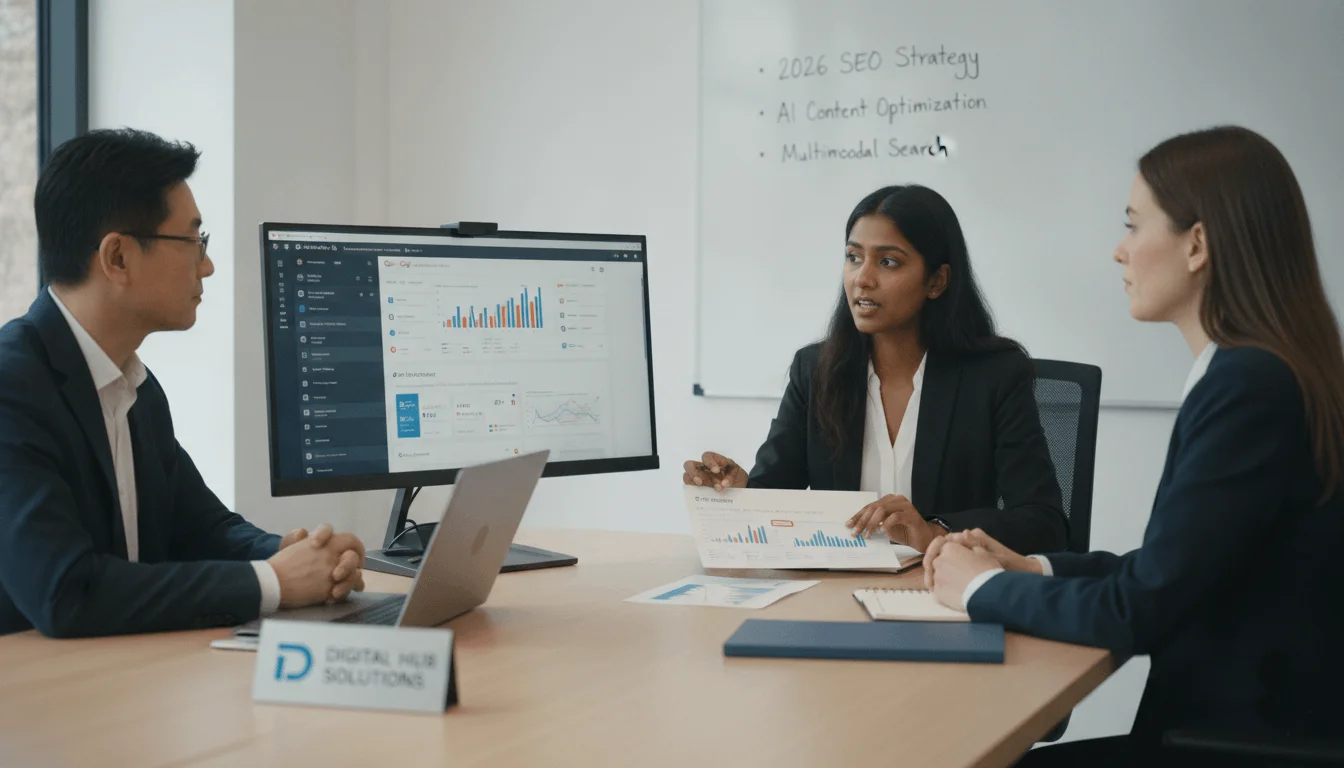
Are
you new to SEO and aiming for a career in digital marketing? This blog
post is exactly what you need! We've compiled 100 of the most relevant
SEO questions and answers for 2026, explained in a simple,
easy-to-understand language that anyone can grasp and apply. Search
Engine Optimization (SEO) is all about making your website rank higher
in Google and other search engine results. In 2026, SEO is rapidly
evolving, especially with the rise of AI, but its fundamental principles
remain as crucial as ever. This guide will boost your confidence,
clarify core concepts, and prepare you to excel in job interviews or
manage your own projects successfully. 1. What is SEO and why is it important? 2. What are the main types of SEO? On-Page SEO: Optimizing elements directly on your website, such as content, titles, headings, and images. Off-Page SEO: Activities performed outside your website to boost its authority, like building backlinks and generating social signals. Technical SEO:
Ensuring your website's technical aspects, such as speed,
mobile-friendliness, and site structure, are optimized for search
engines. 3. What's the difference between On-Page and Off-Page SEO? 4. How does a search engine work? 5. What is a keyword? 6. What is search intent? 7. What is EEAT in SEO? 8. What are AI Overviews (AIO)? 9. Is SEO dead in 2026? 10. What is YMYL? 11. What is a meta title and why is it important? 12. What is a meta description? 13. How do you perform keyword research? 14. What are headings (H1, H2, etc.)? 15. Why is content quality important? 16. What is internal linking? 17. What is duplicate content? 18. How do you optimize images for SEO? 19. What is schema markup? 20. What defines good content in 2026? 21. What is page speed and why does it matter? 22. What is mobile-first indexing? 23. What is a robots.txt file? 24. What is an XML sitemap? 25. What are Core Web Vitals? 26. What is a canonical URL? 27. What is crawl budget? 28. How do you perform a technical SEO audit? 29. What is HTTPS? 30. What is structured data and how do you use it? 31. What are backlinks? 32. What constitutes a good backlink? 33. How do you build backlinks ethically? 34. What is Domain Authority (DA)? 35. Does social media affect SEO? 36. What is Search Everywhere Optimization (SEO)? 37. How do you optimize for AI search? 38. What is topical authority? 39. How important is brand in SEO 2026? 40. What is zero-click search? Q41-50. Additional Trends for 2026: Voice Search Optimization: Focusing on conversational keywords and natural language. Video SEO (YouTube & other platforms): Optimizing video content for discoverability. Entity SEO: Helping search engines understand the real-world entities (people, places, things) your content refers to. Content Freshness: Regularly updating and refreshing content to maintain relevance. User Experience (UX) Signals: Optimizing for factors like time on page, bounce rate, and engagement. Avoiding Black-Hat Tactics: Steering clear of spammy or manipulative SEO techniques. Measuring Success: Utilizing tools like Google Analytics and Google Search Console to track performance. Local SEO: Optimizing for local businesses and geo-specific searches. International SEO (Hreflang): For websites targeting multiple languages or regions. Measuring ROI (Return on Investment) in SEO: Demonstrating the financial impact of SEO efforts. Q51-70. Practical SEO Applications: Daily/Weekly SEO Tasks: Routine checks, content updates, monitoring rankings. Essential SEO Tools: Google Analytics, Search Console, SEMrush, Ahrefs, Screaming Frog. Common SEO Mistakes: Keyword stuffing, buying spammy links, ignoring mobile optimization. Content Cannibalization: When multiple pages target the same keywords, hurting their collective ranking. Recovering from Google Updates: Identifying issues and implementing fixes after algorithm changes. A/B Testing in SEO: Experimenting with different page elements to improve performance. Schema Markup Implementation: Properly adding structured data to your content. Website Migrations: Managing SEO during a site redesign or platform change. Image Optimization Best Practices: Beyond alt text, including lazy loading and responsive images. Core Web Vitals Improvement: Strategies to enhance LCP, FID, and CLS scores. Q71-90. Career-Focused SEO Advice: Building an SEO Portfolio: Showcasing your projects and results. Freelance vs. In-house vs. Agency SEO: Understanding different career paths. SEO Certifications: Which ones are valuable (e.g., Google Ads/Analytics certifications, industry-specific courses). SEO Interview Tips: How to highlight your skills, projects, and problem-solving abilities. Salary Expectations in SEO: What to expect at different experience levels. Daily Routine of an SEO Specialist: A typical day in the life. Transitioning to SEO from other fields: Leveraging existing skills for an SEO career. Networking in the SEO Community: Benefits of connecting with other professionals. Continuous Learning in SEO: The importance of staying updated with industry changes. Soft Skills for SEO Professionals: Communication, problem-solving, analytical thinking. Q91-100. Advanced & Future SEO Concepts: RAG (Retrieval-Augmented Generation) in AI Search: How AI uses external data to generate answers. Agentic AI in SEO: AI systems performing complex, multi-step tasks autonomously. Multimodal Search: Optimizing for searches involving images, video, and text. Measuring AI Traffic: How to track and analyze traffic coming from AI Overviews. Ethics in SEO: Navigating the moral considerations of optimization strategies. Predicting Algorithm Changes: Staying ahead of Google's updates. Scaling SEO for Large Sites: Strategies for managing SEO on enterprise-level websites. Headless CMS and SEO: Optimizing websites built on decoupled architectures. Programmatic SEO: Generating large volumes of optimized pages automatically. Local Pack Optimization Strategies: Beyond basic GMB listings for local businesses. (To
elaborate on all 100 questions and answers, each point would need a
short, actionable, and beginner-friendly explanation. Practice applying
one concept per week on a test site to solidify your understanding!) Start with Free Tools: Get familiar with Google Search Console, Google Analytics, and Google Keyword Planner. They are invaluable. Build a Personal Project: Create a small blog or optimize a niche website to gain hands-on experience and demonstrate results. This is your portfolio. Learn by Doing: Don't just read; actively fix website issues, track traffic growth, and experiment with different strategies. Stay Updated: SEO is always changing. Follow reliable sources like Search Engine Journal, Moz, or reputable YouTube channels. Nail Your Interviews:
When interviewing, always provide examples from your real-world
projects and clearly explain the "why" behind your actions and
decisions. This
comprehensive guide aims to help you understand SEO deeply and apply it
effectively. Start small, stay consistent, and you will undoubtedly
succeed in your SEO career in 2026 and beyond. Good luck! If
this blog post helped you, please share it and comment your favorite
tip below! For more insights, explore our Digital Marketing category. Here are some common questions about SEO, especially relevant for beginners and the changing landscape of 2026. 1. Is SEO still relevant in 2026 with the rise of AI? 2. How long does it take to see results from SEO? 3. Do I need to be a coder to do SEO? 4. What are the most important SEO factors for 2026? High-Quality, EEAT-driven Content: Original, authoritative, and trustworthy content. User Experience (UX): Fast loading speeds, mobile-friendliness, and overall site usability (Core Web Vitals). Topical Authority: Establishing your website as a go-to resource for specific topics. Brand Building: A strong brand reputation and branded searches. AI Search Optimization: Crafting clear, concise answers suitable for AI Overviews and conversational search. 5. How often should I update my website's content for SEO? 6. What are some essential free SEO tools for beginners? Google Search Console: Essential for monitoring your site's performance in Google search, identifying crawl errors, and checking index status. Google Analytics: To understand your website traffic, user behavior, and conversions. Google Keyword Planner: For basic keyword research and identifying search volumes. Google PageSpeed Insights: To check and improve your website's loading speed. 7. Can I do SEO for my small business myself? 8. What is the difference between SEO and SEM? 9. Will generative AI replace SEO professionals? 10. How can I learn more about SEO? Read Reputable Blogs: Follow industry leaders like Search Engine Journal, Moz, Ahrefs, SEMrush, and Google's own Webmaster Blog. Online Courses: Platforms like Coursera, Udemy, HubSpot Academy, and Google's Skillshop offer comprehensive courses. Experiment: The best way to learn is by doing. Start a personal blog or optimize a small website and apply the concepts you learn. Join Communities: Engage with other SEO professionals on forums, social media groups, or LinkedIn.100 Latest SEO Questions & Answers for 2026: A Complete Beginner's Guide
Part 1: Basic SEO Questions (Q1-10)
SEO
is the process of optimizing a website to improve its visibility and
ranking in free (organic) search results. It helps attract more visitors
without paying for ads. It's crucial because it provides businesses
with consistent traffic, builds trust and credibility, and ultimately
drives sales and growth over time.
There are three primary types:
On-Page
SEO involves optimizing elements you control directly on your site
(e.g., keywords, content quality, internal links). Off-Page SEO involves
external signals from other websites (e.g., quality backlinks) that
boost your site's authority.
Search
engines like Google work by crawling websites to discover new content,
indexing (storing) this information, and then ranking results based on
relevance, quality, and user signals to provide the best possible
answers to a user's query.
A
keyword is a word or phrase that people type into a search engine when
looking for information, products, or services. Example: "best SEO tips
2026."
Search
intent refers to the underlying goal a user has when typing a query
into a search engine – whether they want to learn something
(informational), buy something (transactional), or navigate to a
specific website (navigational). Good SEO aligns with this intent.
EEAT
stands for Experience, Expertise, Authoritativeness, and
Trustworthiness. Google highly values content from genuine experts with
demonstrable proof (e.g., author bios, citations, reviews). This is
extremely important in 2026.
AI
Overviews are AI-generated summaries that Google displays at the top of
search results. To optimize for these, focus on creating clear,
concise, and authoritative answers within your content.
Absolutely
not! SEO is constantly evolving. Instead of relying on outdated
tactics, the focus in 2026 is on creating high-quality, human-centric
content, providing an excellent user experience, and optimizing for
AI-driven search.
YMYL
stands for "Your Money or Your Life" pages. These are pages that can
significantly impact a user's health, financial stability, or safety
(e.g., medical advice, financial guidance). Such pages require
exceptionally high EEAT standards.Part 2: On-Page SEO (Q11-20)
The
meta title is the clickable blue link displayed in search results. It
should be under 60 characters, include your main keyword, and be
compelling to encourage clicks.
The
meta description is a short summary (under 160 characters) that appears
below the meta title in search results. It influences the click-through
rate (CTR) by giving users a preview of your page's content.
Use
tools like Google Keyword Planner, Ahrefs, or SEMrush to find relevant
keywords. Look for search volume, difficulty, and user intent. Focus on
long-tail keywords (phrases of three or more words) for better
targeting.
H1
is the main title of your page. H2, H3, and subsequent headings help
organize your content into readable sections. Use keywords naturally
within your headings to improve relevance.
In
2026, human-written, helpful, and regularly updated content
consistently ranks better than AI-generated or spammy content. Always
write primarily for your audience.
Internal
linking involves linking pages within your own website. This helps
users navigate your site, distributes "link equity," and helps search
engines understand your site's structure and hierarchy.
Duplicate
content refers to identical or nearly identical content that appears on
multiple pages within your site or across different domains. Use
canonical tags to prevent issues with search engines.
Use descriptive file names, include relevant keywords in alt text, and compress images to ensure fast loading times.
Schema
markup is a form of microdata that helps search engines understand the
context of your content, allowing for rich snippets (like star ratings,
FAQ accordions) in search results.
Good
content in 2026 is helpful, original, provides genuine experience,
includes multimedia (images, videos), and is regularly updated to remain
fresh and accurate.Part 3: Technical SEO (Q21-30)
Page
speed is how quickly your page's content loads. Tools like Google
PageSpeed Insights can measure this. Faster sites offer a better user
experience, which often leads to higher rankings and lower bounce rates.
Mobile-first
indexing means Google primarily uses the mobile version of your website
for crawling and indexing. Therefore, ensuring your site is responsive
and performs well on mobile devices is critical.
A
robots.txt file is a text file that tells search engine crawlers which
pages or sections of your site they should or shouldn't access.
An
XML sitemap is a list of all important pages on your website that you
want search engines to crawl and index easily. It helps search engines
discover your content more efficiently.
Core
Web Vitals are a set of metrics from Google that measure real-world
user experience for loading speed, interactivity, and visual stability.
They are significant ranking factors.
A
canonical URL tells search engines which version of a page is the
preferred or "master" version, helping to prevent issues caused by
duplicate content.
Crawl
budget refers to the number of pages a search engine crawler will crawl
on your site within a given timeframe. It's particularly important for
large websites with thousands of pages.
A
technical SEO audit involves checking your site for issues related to
speed, mobile-friendliness, broken links, index status (using Google
Search Console), sitemap configuration, and HTTPS implementation.
HTTPS
(Hypertext Transfer Protocol Secure) is the secure version of HTTP. It
encrypts data exchanged between a user's browser and your website,
providing security and boosting user trust, which is also a ranking
factor.
Structured
data is a standardized format for providing information about a webpage
and classifying its content. It helps search engines understand your
content better and can lead to rich results in SERPs. It's often
implemented using JSON-LD.Part 4: Off-Page SEO & Link Building (Q31-35)
Backlinks
(or inbound links) are links from other websites to your website. They
act as "votes of confidence" from other sites, signaling to search
engines that your content is valuable and authoritative. Quality over
quantity is key.
A
good backlink comes from a relevant, authoritative, and trusted
website. The anchor text used for the link and its placement on the
linking page also play a role.
Ethical
backlink building strategies include creating high-quality, shareable
content, guest posting on reputable sites, broken link building (finding
broken links on other sites and suggesting your content as a
replacement), and leveraging platforms like HARO (Help A Reporter Out).
Domain
Authority is a search engine ranking score (developed by Moz, not
Google) that predicts how likely a website is to rank in search engine
result pages. Tools like Ahrefs use similar metrics.
Indirectly,
yes. While social shares don't directly impact rankings, social media
can drive traffic to your content, increase brand visibility and
mentions, and foster engagement, all of which can positively influence
SEO signals.Part 5: 2026 Trends & AI SEO (Q36-40)
This
refers to optimizing your presence across all search touchpoints,
including Google, YouTube, AI chatbots, social media platforms, and
voice search, to ensure your brand is discoverable wherever users are
looking.
To
optimize for AI search, focus on creating clear, concise, and direct
answers to common questions. Use natural language, build topical
authority by comprehensively covering subjects, and strengthen your
brand presence.
Topical
authority means becoming the go-to expert on a specific topic by
thoroughly covering all its related sub-topics and questions with
high-quality content, rather than just targeting individual keywords.
Brand
is extremely important in 2026. Branded searches, brand mentions, and a
strong online reputation signal trustworthiness and authority to search
engines, which directly impacts rankings.
Zero-click
search occurs when users find the answer to their query directly in the
search results (e.g., through a featured snippet, Knowledge Panel, or
AI Overview) without needing to click on any website. Optimizing for
these direct answers is crucial.SEO Career Tips for Beginners
Frequently Asked Questions (FAQs) about SEO in 2026
Yes,
absolutely! SEO is not dead; it's evolving. While AI is changing how
search engines operate and how content is consumed (e.g., AI Overviews),
the fundamental need for high-quality, relevant, and authoritative
content remains paramount. SEO strategies now include optimizing for
AI-driven search experiences and strong brand presence.
SEO
is a long-term strategy. Typically, you can start seeing initial
results within 3-6 months, but significant improvements and sustained
ranking gains often take 6-12 months or even longer, depending on your
industry, competition, and consistency of effort.
No,
you don't need to be a professional coder, but a basic understanding of
HTML, CSS, and how websites are structured (technical SEO basics) is
highly beneficial. Many SEO tools and content management systems (CMS)
simplify the process, but foundational technical knowledge helps you
identify and fix issues more effectively.
For 2026, the key factors include:
Regularly!
Google favors fresh and up-to-date content, especially for
informational queries. Aim to review and update your core content at
least annually, and consider adding new, relevant content regularly to
maintain topical authority and engagement.
For beginners, Google offers excellent free tools:
Absolutely!
Many small businesses can effectively manage their basic SEO in-house,
especially for local SEO. Start by optimizing your Google Business
Profile, ensuring your website is mobile-friendly and fast, creating
quality content, and building local citations. As your business grows,
you might consider professional help.
SEO (Search Engine Optimization) focuses on improving your organic (unpaid) search engine rankings.
SEM (Search Engine Marketing)
is a broader term that includes SEO, but also paid advertising (like
Google Ads - PPC or Pay-Per-Click) to gain visibility in search results.
No,
generative AI is a tool, not a replacement. AI can assist with tasks
like content generation, keyword research, and data analysis, making SEO
professionals more efficient. However, human strategists are still
essential for understanding complex search intent, building authentic
brands, navigating ethical considerations, and adapting to ever-changing
algorithm updates. The role of an SEO specialist will evolve, requiring
more strategic and less repetitive work.
There are many ways to learn:
100 Latest SEO Questions & Answers for 2026 – Your Beginner's Guide to an SEO Career & Interviews
Discussion
0 Comments
You must Log In to join the conversation.
No comments yet.
Be the first to share your thoughts!